How to Ditch the Clock: Non-Linear Time Blocking for Fluctuating Energy Levels
How to Ditch the Clock: Non-Linear Time Blocking for Fluctuating Energy Levels
Do you ever stare at your meticulously color-coded calendar, only to realize that despite having a designated hour for “deep work,” your brain simply refuses to cooperate? We’ve all been there. The traditional productivity narrative tells us that success requires cramming our tasks into rigid, hour-by-hour schedules. We try to force our biology into spreadsheets, treating ourselves like machines with a constant, unwavering output rate. But human energy doesn’t work that way. If you find yourself exhausted by 2 PM and failing to keep up with your own strict itineraries, it might be time to change your approach. Enter non-linear time blocking, a revolutionary system that teaches you to ditch the clock, categorize tasks by their actual cognitive load, and match them to your natural energy peaks throughout the day.
The flaws of rigid hourly schedules

For decades, traditional time blocking has been the gold standard of productivity advice. The premise is simple: divide your day into blocks of time and assign a specific task to each block. From 9:00 AM to 10:00 AM, you write a report. From 10:00 AM to 11:00 AM, you answer emails. While this looks fantastic on paper, it often falls apart in reality. Why? Because it completely ignores the fluctuating nature of human energy levels.
When we use traditional time blocking, we assume that our capacity to focus at 9:00 AM is identical to our capacity to focus at 3:00 PM. But what happens when 3:00 PM rolls around, you’re scheduled to write a complex proposal, and you’re hitting an afternoon slump? You stare blankly at the screen, produce subpar work, and end up feeling guilty for not sticking to the plan. This rigid approach leads to burnout, frustration, and ironically, decreased productivity. It forces us to fight against our natural biology instead of working with it.
What exactly is non-linear time blocking?

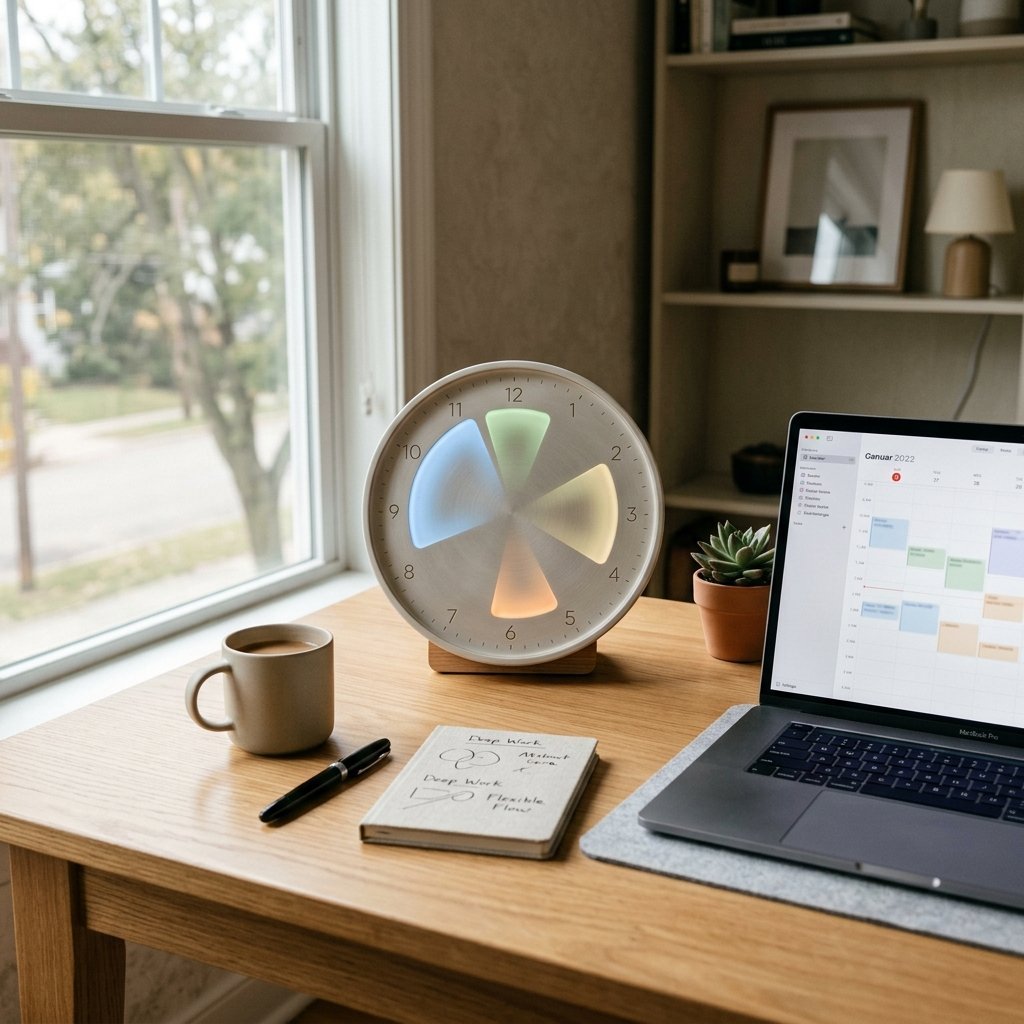
At its core, non-linear time blocking is a dynamic productivity framework that prioritizes energy management over time management. Instead of deciding when you will do something hours or days in advance, you organize your tasks based on how much mental energy they require. Then, you execute those tasks by tuning into your current physical and mental state.
This method acknowledges that our energy fluctuates in waves, governed by what are known as ultradian rhythms. These are natural cycles of brain activity that occur throughout the day, typically consisting of 90 to 120 minutes of high focus followed by a 20-minute period of fatigue. By aligning your to-do list with these rhythms, you stop swimming upstream. You perform highly demanding tasks when you naturally have the bandwidth for them, and you knock out easy, administrative tasks when your brain needs a break.
Categorizing your tasks by cognitive load
The foundation of this system is creating task pools based on cognitive demand rather than arbitrary deadlines. To start, you need to look at your master to-do list and divide it into three distinct categories:
1. High cognitive load (deep work)
These are the tasks that require your absolute best self. They demand intense focus, creativity, problem-solving, and critical thinking. Examples include writing articles, coding a new feature, designing a presentation, strategic planning, or analyzing complex data. These tasks should never be forced during an energy slump; they belong exclusively in your peak energy windows.
2. Medium cognitive load
These tasks require attention and effort, but they aren’t quite as draining as deep work. You can usually accomplish them even if you aren’t feeling 100% focused. Examples include attending standard meetings, responding to complex emails, conducting routine research, or editing a draft. These are perfect for the periods when you are ramping up to or coming down from an energy peak.
3. Low cognitive load (shallow work)
Low cognitive load tasks are the administrative chores that you could practically do in your sleep. They require very little mental bandwidth. Examples include organizing your digital files, deleting spam emails, filling out expense reports, or doing data entry. These are the perfect tasks to tackle when you hit that inevitable mid-afternoon slump.
Step-by-step guide to implementing non-linear time blocking
Transitioning from a rigid calendar to an energy-based system requires a shift in mindset, but the practical steps are straightforward. Here is how you can start implementing this framework today:
Step 1: Audit your ultradian rhythms
Before you can match tasks to your energy, you need to know what your energy looks like. Spend three to five days tracking your focus and fatigue levels. Keep a simple log or use an app to note when you feel most alert and when you feel sluggish. You will likely notice a pattern. Perhaps you have a massive surge of clarity from 8:00 AM to 10:30 AM, a dip after lunch, and a secondary “second wind” around 4:00 PM. Identifying these personal rhythms is crucial.
Step 2: Create your energy-based task pools
Abandon the daily schedule that lists tasks by the hour. Instead, create three lists (or columns on a Kanban board) labeled “High Energy,” “Medium Energy,” and “Low Energy.” Populate these lists with your tasks for the week, categorizing them strictly by their cognitive load.
Step 3: Ride the energy wave
This is where the magic happens. When you sit down to work, assess your current state. Are you feeling sharp, motivated, and clear-headed? Pull a task from the “High Energy” pool and dive into deep work. Are you feeling distracted and mildly lethargic? Don’t force the hard stuff. Pull a task from the “Low Energy” pool and knock out some administrative chores. By continuously selecting tasks that match your current capacity, you maintain momentum throughout the entire day.
Real-world scenarios: the system in action
Let’s look at how this plays out in a typical workday. Imagine you have three major tasks: writing a crucial client proposal (High), reviewing a colleague’s slide deck (Medium), and sorting through an inbox of 100 unread emails (Low).
In a traditional system, you might schedule the proposal for 2:00 PM. But when 2:00 PM arrives, you’re experiencing a post-lunch energy crash. You stare at the screen for an hour, write three sentences, and feel defeated.
With an energy-based approach, you start your morning feeling refreshed. Recognizing this peak, you tackle the client proposal immediately, finishing a strong draft in just 90 minutes. By early afternoon, you feel your energy dipping. Instead of fighting it, you switch to the low-energy task of clearing your inbox, feeling productive without straining your brain. As you recover later in the afternoon, you hit a medium energy level, which is the perfect time to review the slide deck. You’ve accomplished everything, but with significantly less friction and frustration.
Embracing flexibility over guilt
One of the most profound benefits of this system is the elimination of productivity guilt. When you miss a self-imposed hourly deadline under a traditional schedule, you feel like you’ve failed. But when you ditch the clock, you realize that stepping away from a difficult task during a brain-fog moment isn’t failing—it’s strategic energy conservation. You learn to trust that your energy will return, and when it does, you’ll be ready for the heavy lifting.
Conclusion: reclaiming your natural rhythm
We are biological organisms, not robots, and it is time we started working like it. By forcing ourselves into rigid, hour-by-hour schedules, we invite burnout and stifled creativity. Adopting non-linear time blocking offers a compassionate, highly effective alternative. By tuning into your ultradian rhythms and categorizing your work by cognitive load, you can maximize your output while minimizing exhaustion. It allows you to work smarter, not harder, by riding the natural waves of your energy rather than constantly fighting against the tide. Ditch the clock, listen to your body, and watch your productivity—and your well-being—soar.
You can read more about Designing a Sensory-Friendly Workspace for Deep Work and ADHD Focus.