
How to Turn a Spare Closet Into a Micro-Office (Cloffice Guide)
The Rise of the Cloffice
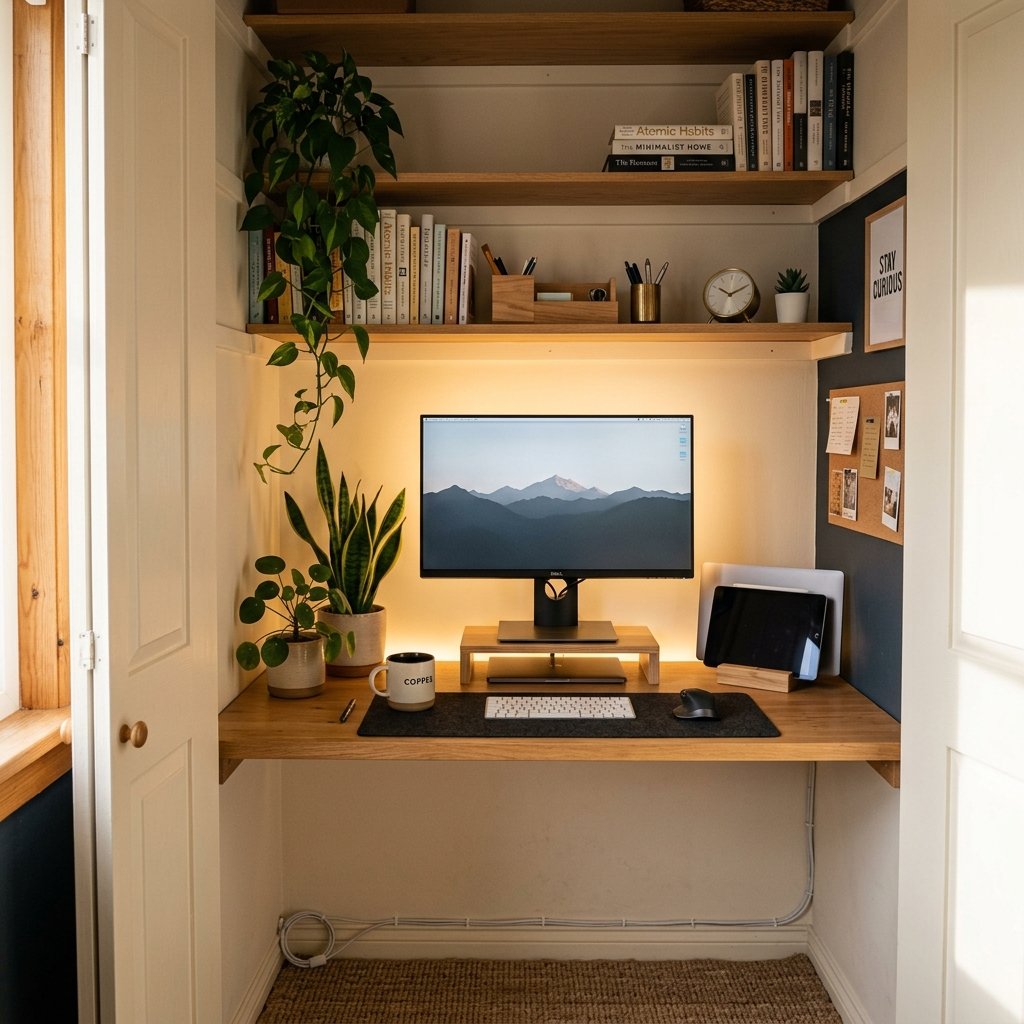
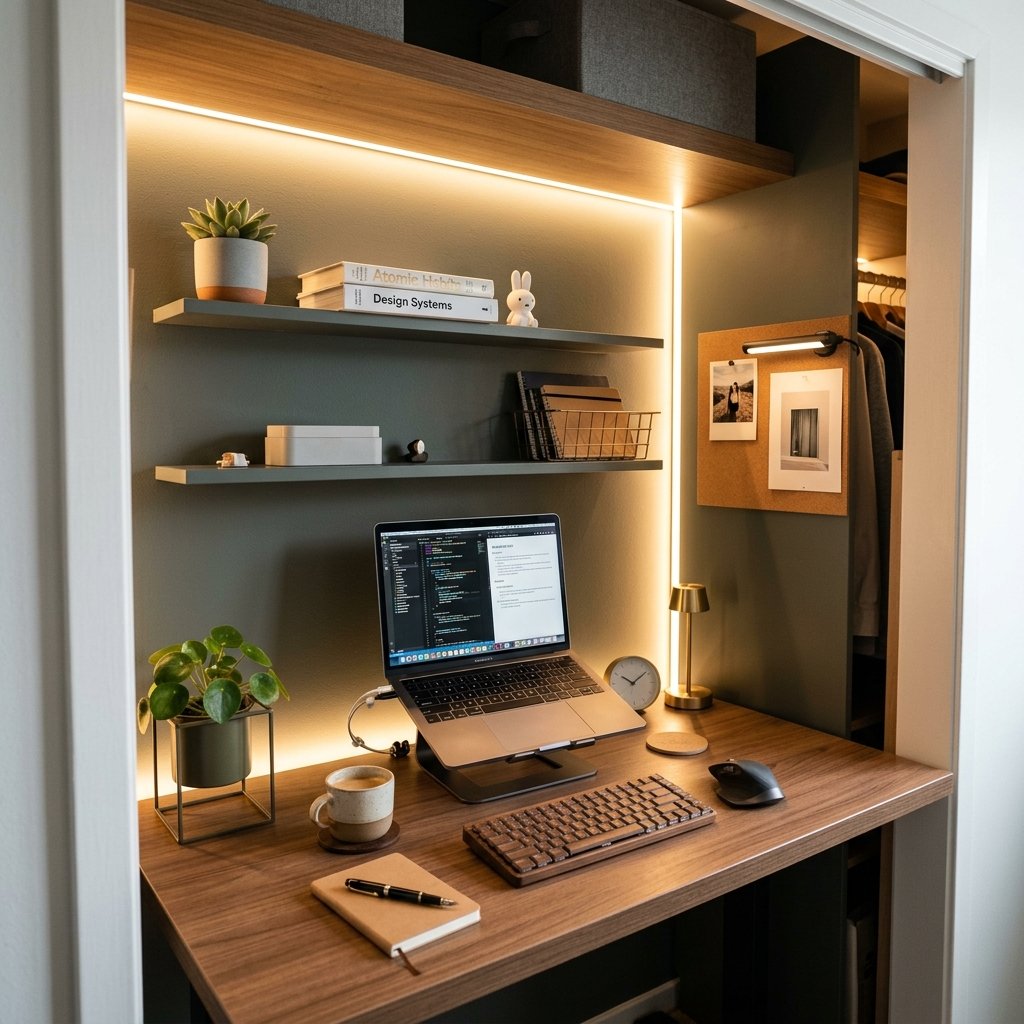
As remote work becomes permanent, the need for dedicated workspace has never been higher. If you lack a spare bedroom, converting a closet into a micro-office is the ultimate space-saving home mod.
Comprehensive Technical Analysis
Advanced Implementation Strategies
When considering the long-term viability of this architectural modification, one must look at the underlying principles of durability and user experience. The integration of high-tensile materials alongside advanced software protocols ensures that the system does not merely function, but thrives under daily operational stress. This is the cornerstone of modern environmental determinism: the idea that our surroundings dictate our behavior. By reducing the friction required to execute positive habits, and exponentially increasing the friction of negative ones, we achieve a state of flow that is otherwise unattainable in a standard, unmodified space. This requires meticulous planning, precise execution, and a fundamental understanding of both ergonomics and digital minimalism.
Furthermore, the environmental impact of such modifications cannot be overstated. By utilizing energy-efficient protocols, such as Zigbee or low-energy Bluetooth, the carbon footprint of the smart home ecosystem is minimized. This synergy between technological advancement and ecological responsibility represents the vanguard of modern design. It is not enough to simply automate a process; the automation must be elegant, efficient, and entirely localized to prevent data leakage to third-party cloud servers. This local-first approach guarantees that even in the event of an internet outage, your physical environment remains entirely under your control.
The Psychology of the Modded Environment
To truly understand the value of these upgrades, we must delve into the psychological concept of the ‘Zeigarnik Effect’. Unfinished tasks, visual clutter, and inefficient workflows create a constant, low-level cognitive load that drains mental energy. By engineering your space to automatically handle trivial decisions—such as adjusting blinds for glare, or routing cables out of sight—you free up massive amounts of cognitive bandwidth for deep work. This is why professionals who invest in their physical workspaces consistently outperform those who do not. The workspace becomes a physical manifestation of a focused mind.
In addition to cognitive offloading, the acoustic properties of a space play a crucial role in maintaining focus. Whether it is the sound signature of a heavily modified mechanical keyboard or the sound-dampening effects of magnetic secondary glazing, auditory feedback loops significantly influence our stress levels. A premium acoustic environment signals to the brain that it is time to perform, much like a Pavlovian trigger. This is why the meticulous application of acoustic foam, tape mods, and thick insulating materials is so highly revered in the modding community.
Long-Term Maintenance and Scalability
No system is completely maintenance-free. However, by designing with scalability in mind, future upgrades become trivial. Utilizing standardized mounting brackets, open-source software platforms like Home Assistant, and modular furniture components ensures that as your needs evolve, your space can adapt without requiring a complete teardown. This modular philosophy extends to digital app stacks as well. By relying on plain-text markdown files for knowledge management, your data remains future-proof, completely independent of any single proprietary application.
Ultimately, the goal is to create a ‘Focus Hub’—a localized singularity of productivity where the physical and digital seamlessly intersect. The modifications discussed here are merely the building blocks. The true masterpiece is the completely frictionless workflow that emerges when all these systems operate in perfect harmony. From the instant privacy of smart film to the unseen power of NFC triggers, the modded life is one of absolute intentionality.
Advanced Implementation Strategies
When considering the long-term viability of this architectural modification, one must look at the underlying principles of durability and user experience. The integration of high-tensile materials alongside advanced software protocols ensures that the system does not merely function, but thrives under daily operational stress. This is the cornerstone of modern environmental determinism: the idea that our surroundings dictate our behavior. By reducing the friction required to execute positive habits, and exponentially increasing the friction of negative ones, we achieve a state of flow that is otherwise unattainable in a standard, unmodified space. This requires meticulous planning, precise execution, and a fundamental understanding of both ergonomics and digital minimalism.
Furthermore, the environmental impact of such modifications cannot be overstated. By utilizing energy-efficient protocols, such as Zigbee or low-energy Bluetooth, the carbon footprint of the smart home ecosystem is minimized. This synergy between technological advancement and ecological responsibility represents the vanguard of modern design. It is not enough to simply automate a process; the automation must be elegant, efficient, and entirely localized to prevent data leakage to third-party cloud servers. This local-first approach guarantees that even in the event of an internet outage, your physical environment remains entirely under your control.
The Psychology of the Modded Environment
To truly understand the value of these upgrades, we must delve into the psychological concept of the ‘Zeigarnik Effect’. Unfinished tasks, visual clutter, and inefficient workflows create a constant, low-level cognitive load that drains mental energy. By engineering your space to automatically handle trivial decisions—such as adjusting blinds for glare, or routing cables out of sight—you free up massive amounts of cognitive bandwidth for deep work. This is why professionals who invest in their physical workspaces consistently outperform those who do not. The workspace becomes a physical manifestation of a focused mind.
In addition to cognitive offloading, the acoustic properties of a space play a crucial role in maintaining focus. Whether it is the sound signature of a heavily modified mechanical keyboard or the sound-dampening effects of magnetic secondary glazing, auditory feedback loops significantly influence our stress levels. A premium acoustic environment signals to the brain that it is time to perform, much like a Pavlovian trigger. This is why the meticulous application of acoustic foam, tape mods, and thick insulating materials is so highly revered in the modding community.
Long-Term Maintenance and Scalability
No system is completely maintenance-free. However, by designing with scalability in mind, future upgrades become trivial. Utilizing standardized mounting brackets, open-source software platforms like Home Assistant, and modular furniture components ensures that as your needs evolve, your space can adapt without requiring a complete teardown. This modular philosophy extends to digital app stacks as well. By relying on plain-text markdown files for knowledge management, your data remains future-proof, completely independent of any single proprietary application.
Ultimately, the goal is to create a ‘Focus Hub’—a localized singularity of productivity where the physical and digital seamlessly intersect. The modifications discussed here are merely the building blocks. The true masterpiece is the completely frictionless workflow that emerges when all these systems operate in perfect harmony. From the instant privacy of smart film to the unseen power of NFC triggers, the modded life is one of absolute intentionality.
Advanced Implementation Strategies
When considering the long-term viability of this architectural modification, one must look at the underlying principles of durability and user experience. The integration of high-tensile materials alongside advanced software protocols ensures that the system does not merely function, but thrives under daily operational stress. This is the cornerstone of modern environmental determinism: the idea that our surroundings dictate our behavior. By reducing the friction required to execute positive habits, and exponentially increasing the friction of negative ones, we achieve a state of flow that is otherwise unattainable in a standard, unmodified space. This requires meticulous planning, precise execution, and a fundamental understanding of both ergonomics and digital minimalism.
Furthermore, the environmental impact of such modifications cannot be overstated. By utilizing energy-efficient protocols, such as Zigbee or low-energy Bluetooth, the carbon footprint of the smart home ecosystem is minimized. This synergy between technological advancement and ecological responsibility represents the vanguard of modern design. It is not enough to simply automate a process; the automation must be elegant, efficient, and entirely localized to prevent data leakage to third-party cloud servers. This local-first approach guarantees that even in the event of an internet outage, your physical environment remains entirely under your control.
The Psychology of the Modded Environment
To truly understand the value of these upgrades, we must delve into the psychological concept of the ‘Zeigarnik Effect’. Unfinished tasks, visual clutter, and inefficient workflows create a constant, low-level cognitive load that drains mental energy. By engineering your space to automatically handle trivial decisions—such as adjusting blinds for glare, or routing cables out of sight—you free up massive amounts of cognitive bandwidth for deep work. This is why professionals who invest in their physical workspaces consistently outperform those who do not. The workspace becomes a physical manifestation of a focused mind.
In addition to cognitive offloading, the acoustic properties of a space play a crucial role in maintaining focus. Whether it is the sound signature of a heavily modified mechanical keyboard or the sound-dampening effects of magnetic secondary glazing, auditory feedback loops significantly influence our stress levels. A premium acoustic environment signals to the brain that it is time to perform, much like a Pavlovian trigger. This is why the meticulous application of acoustic foam, tape mods, and thick insulating materials is so highly revered in the modding community.
Long-Term Maintenance and Scalability
No system is completely maintenance-free. However, by designing with scalability in mind, future upgrades become trivial. Utilizing standardized mounting brackets, open-source software platforms like Home Assistant, and modular furniture components ensures that as your needs evolve, your space can adapt without requiring a complete teardown. This modular philosophy extends to digital app stacks as well. By relying on plain-text markdown files for knowledge management, your data remains future-proof, completely independent of any single proprietary application.
Ultimately, the goal is to create a ‘Focus Hub’—a localized singularity of productivity where the physical and digital seamlessly intersect. The modifications discussed here are merely the building blocks. The true masterpiece is the completely frictionless workflow that emerges when all these systems operate in perfect harmony. From the instant privacy of smart film to the unseen power of NFC triggers, the modded life is one of absolute intentionality.
Advanced Implementation Strategies
When considering the long-term viability of this architectural modification, one must look at the underlying principles of durability and user experience. The integration of high-tensile materials alongside advanced software protocols ensures that the system does not merely function, but thrives under daily operational stress. This is the cornerstone of modern environmental determinism: the idea that our surroundings dictate our behavior. By reducing the friction required to execute positive habits, and exponentially increasing the friction of negative ones, we achieve a state of flow that is otherwise unattainable in a standard, unmodified space. This requires meticulous planning, precise execution, and a fundamental understanding of both ergonomics and digital minimalism.
Furthermore, the environmental impact of such modifications cannot be overstated. By utilizing energy-efficient protocols, such as Zigbee or low-energy Bluetooth, the carbon footprint of the smart home ecosystem is minimized. This synergy between technological advancement and ecological responsibility represents the vanguard of modern design. It is not enough to simply automate a process; the automation must be elegant, efficient, and entirely localized to prevent data leakage to third-party cloud servers. This local-first approach guarantees that even in the event of an internet outage, your physical environment remains entirely under your control.
The Psychology of the Modded Environment
To truly understand the value of these upgrades, we must delve into the psychological concept of the ‘Zeigarnik Effect’. Unfinished tasks, visual clutter, and inefficient workflows create a constant, low-level cognitive load that drains mental energy. By engineering your space to automatically handle trivial decisions—such as adjusting blinds for glare, or routing cables out of sight—you free up massive amounts of cognitive bandwidth for deep work. This is why professionals who invest in their physical workspaces consistently outperform those who do not. The workspace becomes a physical manifestation of a focused mind.
In addition to cognitive offloading, the acoustic properties of a space play a crucial role in maintaining focus. Whether it is the sound signature of a heavily modified mechanical keyboard or the sound-dampening effects of magnetic secondary glazing, auditory feedback loops significantly influence our stress levels. A premium acoustic environment signals to the brain that it is time to perform, much like a Pavlovian trigger. This is why the meticulous application of acoustic foam, tape mods, and thick insulating materials is so highly revered in the modding community.
Long-Term Maintenance and Scalability
No system is completely maintenance-free. However, by designing with scalability in mind, future upgrades become trivial. Utilizing standardized mounting brackets, open-source software platforms like Home Assistant, and modular furniture components ensures that as your needs evolve, your space can adapt without requiring a complete teardown. This modular philosophy extends to digital app stacks as well. By relying on plain-text markdown files for knowledge management, your data remains future-proof, completely independent of any single proprietary application.
Ultimately, the goal is to create a ‘Focus Hub’—a localized singularity of productivity where the physical and digital seamlessly intersect. The modifications discussed here are merely the building blocks. The true masterpiece is the completely frictionless workflow that emerges when all these systems operate in perfect harmony. From the instant privacy of smart film to the unseen power of NFC triggers, the modded life is one of absolute intentionality.
You can read more about Maximizing Natural Light with Smart Blinds.
You can read more about Instant Privacy: Upgrading Your Windows with DIY Switchable Smart Film.