
Designing a Sensory-Friendly Workspace for Deep Work and ADHD Focus
Designing a Sensory-Friendly Workspace for Deep Work and ADHD Focus
When we think of workplace ergonomics, our minds instantly jump to adjustable chairs, monitor heights, and lumbar support. While physical posture is undeniably important, the conversation often stops there, leaving a crucial element of productivity completely unaddressed. What about the invisible forces shaping our focus? Enter sensory ergonomics. For individuals seeking sustained deep work, especially neurodivergent professionals or those managing ADHD, physical alignment isn’t enough. You must also build a sensory friendly workspace that proactively manages the ambient inputs bombarding your nervous system every minute of the workday.
A true sensory-friendly workspace moves past standard posture ergonomics into the realm of optimizing ambient lighting, acoustic soundscaping, and tactile desk feedback. By fine-tuning the sights, sounds, and physical sensations of your environment, you can drastically reduce cognitive load, minimize distractions, and unlock a flow state that allows you to do your best work. In this comprehensive guide, we will explore exactly how to transform your current desk setup into an oasis of focus.
The Foundations of a Sensory Friendly Workspace
Creating a sensory friendly workspace begins with understanding how your brain processes environmental stimuli. For those with ADHD, sensory gating—the brain’s ability to filter out irrelevant information—can be less efficient. This means every hum of the refrigerator, flicker of a fluorescent bulb, or rough texture of a desk mat can consume precious mental energy. Sensory ergonomics aims to control these variables, turning your office into a space that supports, rather than drains, your cognitive resources.
By assessing your unique sensory profile, you can identify whether you are hyper-reactive (easily overwhelmed by stimuli) or hypo-reactive (needing more stimulation to stay alert). A well-designed workspace balances these needs, providing calm where necessary and stimulation where beneficial. Let’s break down the three core pillars of sensory ergonomics: lighting, sound, and touch, and how you can optimize each for peak performance.
Pillar 1: Optimizing Ambient Lighting for Focus
Lighting is arguably the most impactful sensory input in any workspace. Harsh, glaring, or flickering lights can cause eye strain, trigger headaches, and significantly disrupt focus. Conversely, a thoughtfully lit environment can regulate your circadian rhythm, boost alertness, and reduce anxiety.
Say Goodbye to the Big Light
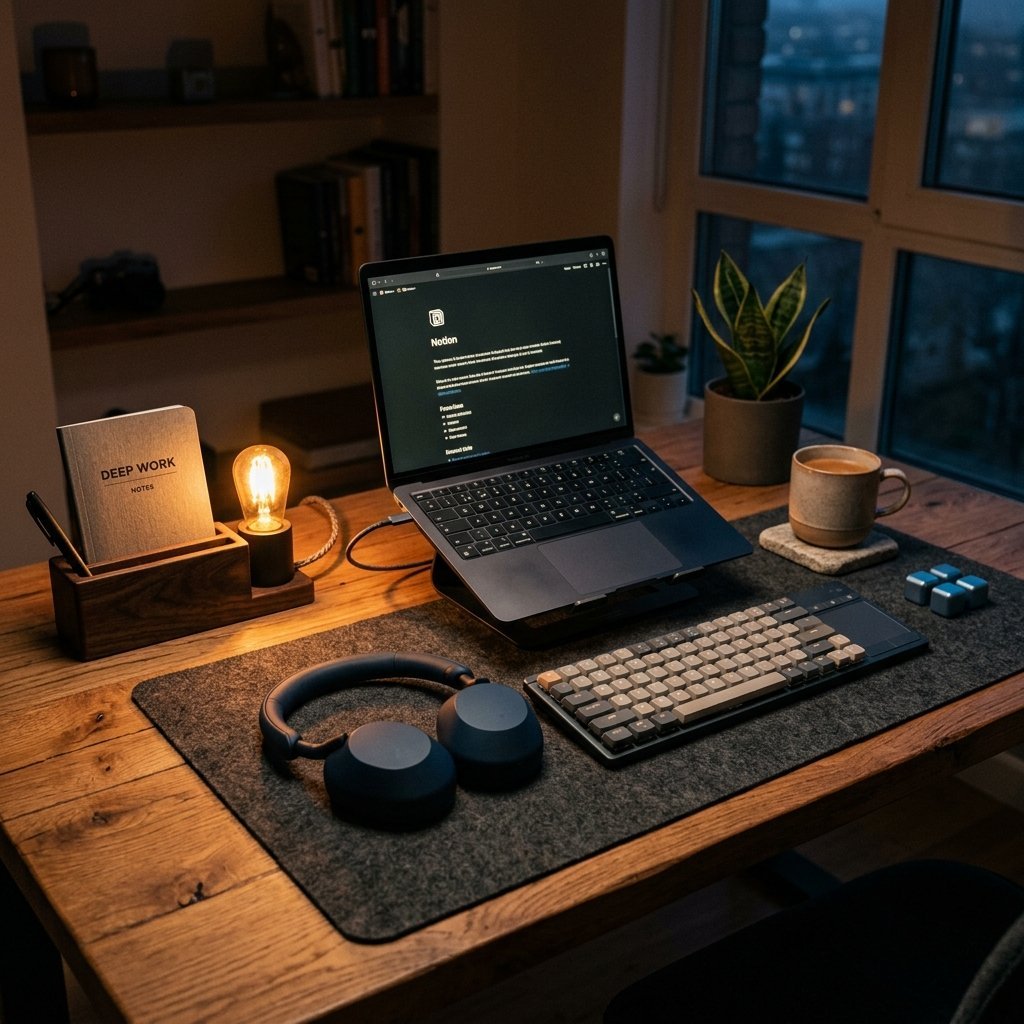
Overhead lighting, colloquially known as “the big light,” is often the enemy of a sensory-friendly setup. Standard office fluorescent lights or excessively bright LEDs scatter light in a way that can feel chaotic. Furthermore, invisible flickering from cheap LED bulbs can cause subconscious stress. Instead, prioritize layered, indirect lighting. Use desk lamps, floor lamps, and bias lighting (LED strips placed behind your monitor) to create a warm, diffused glow that illuminates your work without overwhelming your visual field. Bias lighting is particularly effective at reducing eye strain during long hours of screen time by softening the harsh contrast between your bright monitor and the darker room.
Harnessing Natural Light
Whenever possible, position your desk to take advantage of natural light. Natural sunlight provides a full spectrum of colors that tells your brain it’s time to be awake and alert. However, be mindful of glare on your screen, which can be highly distracting. Use sheer curtains or adjustable blinds to diffuse direct sunlight. If your workspace lacks windows or if you work late into the evening, consider investing in a high-quality therapy lamp that mimics natural sunlight. Using it during the morning hours can help set your biological clock and improve overall daytime alertness.
Color Temperature Matters
The color temperature of your light sources directly impacts your mood and energy levels. Cool, blue-toned light (5000K-6500K) is excellent for analytical tasks and high alertness, but it can become fatiguing over time and should be avoided in the late afternoon. Warm, amber-toned light (2700K-3000K) is soothing and ideal for creative work, reading, or winding down at the end of the day. Smart bulbs that allow you to adjust color temperature throughout the day are a phenomenal investment for sensory control, allowing you to match your lighting to your current task and energy needs.
Pillar 2: Acoustic Soundscaping and Noise Management
Sound is notoriously difficult to block out, and for individuals with ADHD, sudden or erratic noises can instantly shatter a state of deep work. A sensory-optimized workspace doesn’t necessarily have to be perfectly silent; rather, it needs to be sonically controlled and predictable.
The Magic of Brown Noise
While white noise is popular, it can sometimes sound harsh, hissy, or static-like. Brown noise, which emphasizes lower frequencies, mimics the soothing, deep sounds of a rushing river, heavy rainfall, or the low hum of an airplane cabin. Many people with ADHD find that playing brown noise through high-quality speakers or headphones creates a dense auditory “blanket” that masks distracting background noises and anchors their focus without being distracting in itself.
Active Noise Cancellation
Investing in premium Active Noise Cancelling (ANC) headphones is often a game-changer for deep work. These devices use built-in microphones to pick up ambient sound and generate inverse sound waves to cancel it out in real-time. Whether you’re working in a bustling open-plan office, a noisy coffee shop, or a busy household, ANC headphones give you the power to instantly curate your auditory environment at the push of a button.
Acoustic Treatment for Your Room
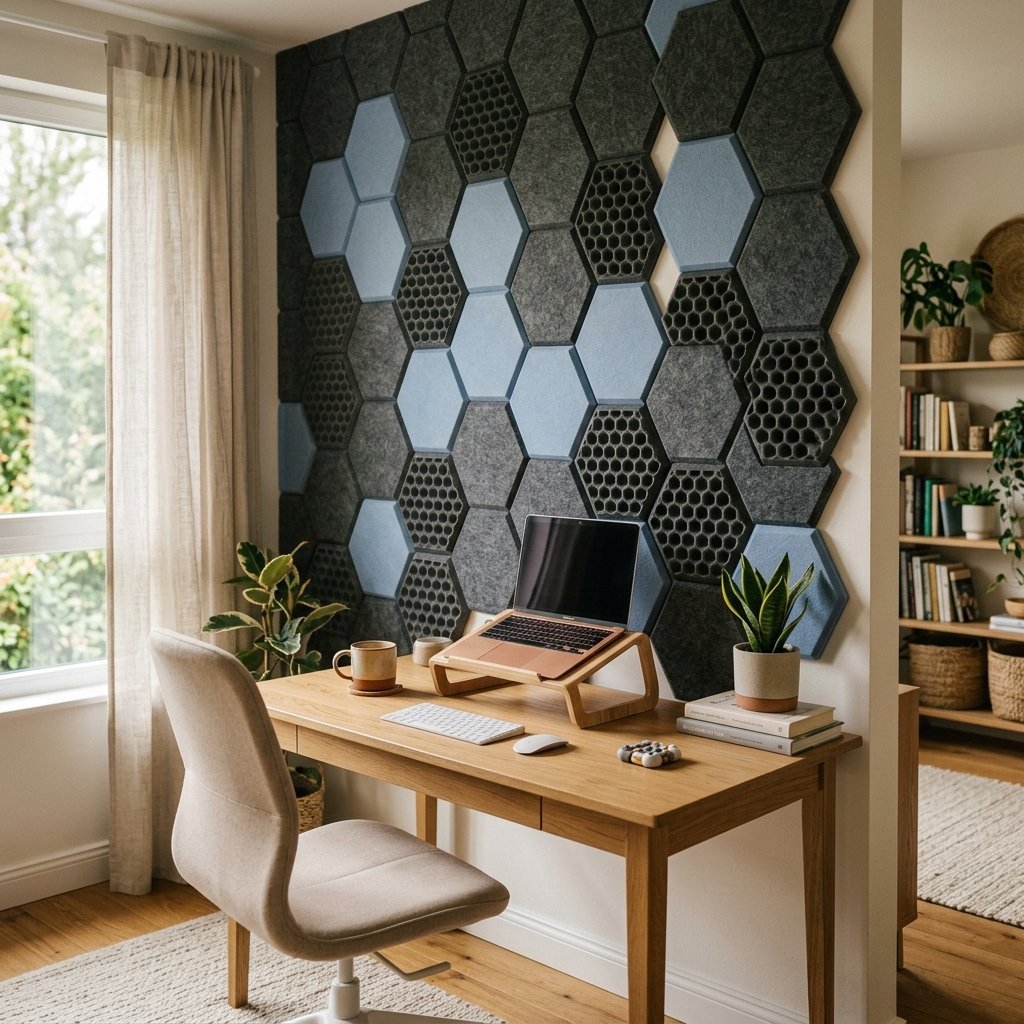
If you have a dedicated home office, consider acoustic treatments to reduce echo and reverberation. Hard surfaces like bare walls, glass windows, and hardwood floors bounce sound waves around, creating a subtle but exhausting auditory clutter. Adding soft furnishings like thick rugs, heavy curtains, or even dedicated acoustic panels on the walls can absorb these stray sound waves, creating a much warmer, calmer acoustic profile that is easier on the nervous system.
Pillar 3: Tactile Desk Feedback and Fidget Solutions
The sense of touch is frequently overlooked in traditional office design, yet tactile feedback plays a massive role in grounding our attention. This is especially true for neurodivergent individuals who rely on “stimming” (self-stimulatory behavior) to maintain focus, process information, and regulate emotions.
The Right Desk Mat and Keyboard
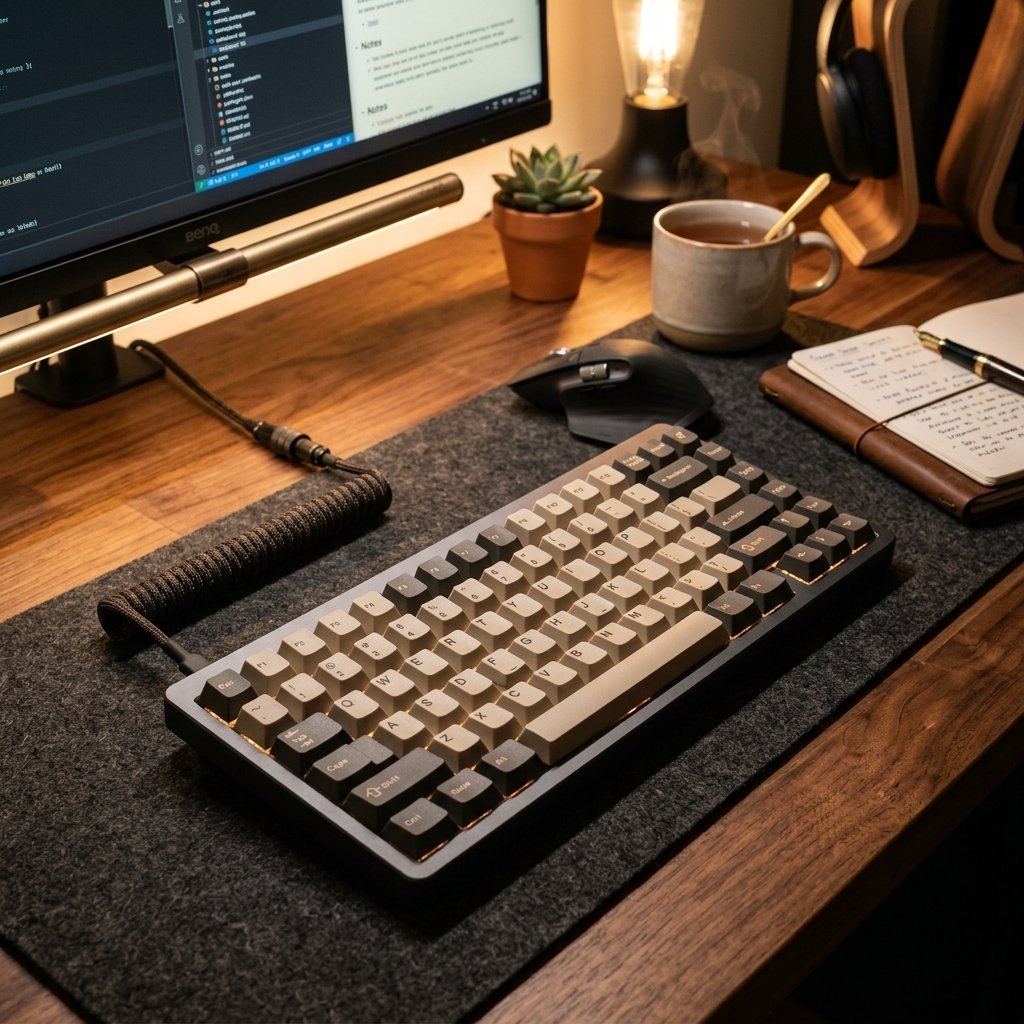
The texture of the surfaces you interact with all day matters significantly. A high-quality, smooth leather or soft wool felt desk mat provides a comforting, premium resting place for your hands and forearms, contrasting sharply with cold, hard laminate. Furthermore, your keyboard is your primary physical connection to your digital work. Mechanical keyboards with satisfying, tactile switches can provide the sensory feedback your brain craves with every single keystroke, turning typing from a mundane task into a sensory-rewarding experience. Conversely, if clicky sounds are distracting to you or others, silent tactile switches offer the physical feel without the auditory noise.
Strategic Fidget Tools
Fidgeting is not a sign of distraction; for many people with ADHD, it is a crucial mechanism for maintaining concentration. Keeping discreet, high-quality fidget tools on your desk allows you to channel restless physical energy without derailing your mental focus. Consider items with varying textures, weights, and resistance levels, such as heavy metal spinner rings, smooth worry stones, kneadable erasers, magnetic sliders, or silent silicone rollers. The key is to choose tools that require minimal visual attention so you can keep your eyes on your screen while your hands stay busy.
Ergonomic and Sensory Seating
While we are moving beyond standard posture ergonomics, the physical feel of your chair is still vital to sensory comfort. Some individuals benefit from seating that allows for gentle, continuous movement, such as an active sitting stool, a wobble cushion, or a balance ball chair. This micro-movement can satisfy the need to fidget. Additionally, consider the fabric of your chair. Breathable mesh might be perfect for those who run hot, while a soft, plush fabric might provide the necessary comforting pressure for others. Weighted lap pads, a common tool in occupational therapy, can also offer deep pressure stimulation while seated, which is clinically known to calm the nervous system and physically anchor the body during stressful tasks.
Integrating Nature for Sensory Harmony
Incorporating elements of the natural world into your workspace—a concept known as biophilic design—can profoundly impact your sensory experience. Nature provides complex, non-repeating patterns (fractals) that are inherently pleasing and calming to the human brain, offering a visual break from the rigid grids of spreadsheets and code.
Adding a few low-maintenance indoor plants like pothos, snake plants, or succulents introduces life and color into the room. Utilizing natural materials like wood organizers, cork boards, and stone coasters adds varied, organic textures. Even keeping a small tabletop water fountain can introduce gentle, restorative auditory and visual sensory inputs. These natural elements help to offset the harsh, artificial nature of screens and electronics, providing your eyes and mind with a micro-break every time you glance at them.
Conclusion: Crafting Your Ultimate Sensory Oasis
Designing a workspace for deep work and ADHD focus requires looking far beyond the standard advice of buying a better ergonomic chair and a monitor stand. By embracing the principles of sensory ergonomics, you empower yourself to take control of the ambient environment that subtly but powerfully dictates your daily cognitive performance. Remember that there is no one-size-fits-all solution when it comes to sensory processing; the goal is to experiment continuously with lighting, soundscapes, and tactile feedback until you find the perfect equilibrium for your unique nervous system.
When you successfully build a personalized sensory friendly workspace, you remove the invisible friction from your day. You stop fighting your environment and start working with it, allowing your mind to dive deeper, focus longer, and achieve your goals with greater peace and productivity.
You can read more about How to Ditch the Clock: Non-Linear Time Blocking for Fluctuating Energy Levels.