
Protect Your Home: The Best Retrofit Smart Water Valves You Can Install Yourself
Protect Your Home: The Best Retrofit Smart Water Valves You Can Install Yourself
Water damage is widely considered one of the most common and financially devastating nightmares a homeowner can ever face. A suddenly burst pipe, a slowly leaking water heater that finally gives way, or a forgotten overflowing bathtub can easily cause tens of thousands of dollars in structural and property damage within a mere matter of minutes. While traditional, inline smart water shut-off valves are incredibly effective at preventing these disastrous scenarios, they come with a significant drawback: they usually require physically cutting into your home’s main water supply line. For the vast majority of homeowners, this is a task that strictly means hiring a professional, licensed plumber, which automatically adds significant labor costs, scheduling hassles, and the anxiety of major plumbing work to the project.
Enter the retrofit smart water valve—a brilliant innovation in the home automation market. These ingenious devices offer a powerful, remarkably DIY-friendly solution to whole-home leak protection. By clamping directly over your existing quarter-turn ball valve, they allow you to add automated leak prevention without cutting a single pipe, without draining your plumbing system, and without paying a hefty plumber’s fee. In this comprehensive, in-depth guide, we will dive thoroughly into the world of retrofit smart water valves, explore exactly how they work, discuss the myriad benefits of choosing a non-invasive installation, and highlight the absolute best options currently available on the market today.
Why Choose a Retrofit Smart Water Valve Over an Inline Model?
Traditional inline smart valves are spliced directly into your plumbing system. While they are undeniably robust and often include built-in flow meters to detect micro-leaks, the installation process is highly invasive. Retrofit valves, on the other hand, take a completely different mechanical approach: they use a motorized arm to physically turn the handle of your existing, manual water valve. Here’s a detailed look at why a retrofit model might be the perfect, pragmatic choice for your home:
- Zero Plumbing Experience Required: This is arguably the biggest selling point. If you can confidently turn a wrench or tighten a few basic screws, you can successfully install a retrofit valve. There’s absolutely no pipe cutting, no messy soldering, no dealing with specialized PEX crimping tools, and crucially, no risk of inadvertently creating a brand new leak during the installation process itself.
- Highly Cost-Effective: By entirely eliminating the need for a professional plumber, you save hundreds of dollars right off the bat. The total cost of ownership for a retrofit system is significantly lower than that of inline models, making high-end leak protection accessible to a much broader range of budgets.
- Extremely Renter-Friendly: Because they do not permanently alter the existing plumbing infrastructure in any way, retrofit valves are an absolutely excellent option for renters or those who know they plan to move in the near future. When your lease is up, you simply unclamp the device, pack it into a box, and take your smart water protection system with you to your next residence.
- Easy Maintenance and Manual Override: Technology isn’t perfect. If the smart motor fails, your Wi-Fi goes down, or you lose power for an extended period without a battery backup, you aren’t locked out of controlling your water. Retrofit models almost universally feature a simple manual override—often a clutch pin you pull or a quick-release mechanism—allowing you to manually operate your water valve just as easily as you did before the motor was installed.
How Do Retrofit Smart Water Valves Actually Work?

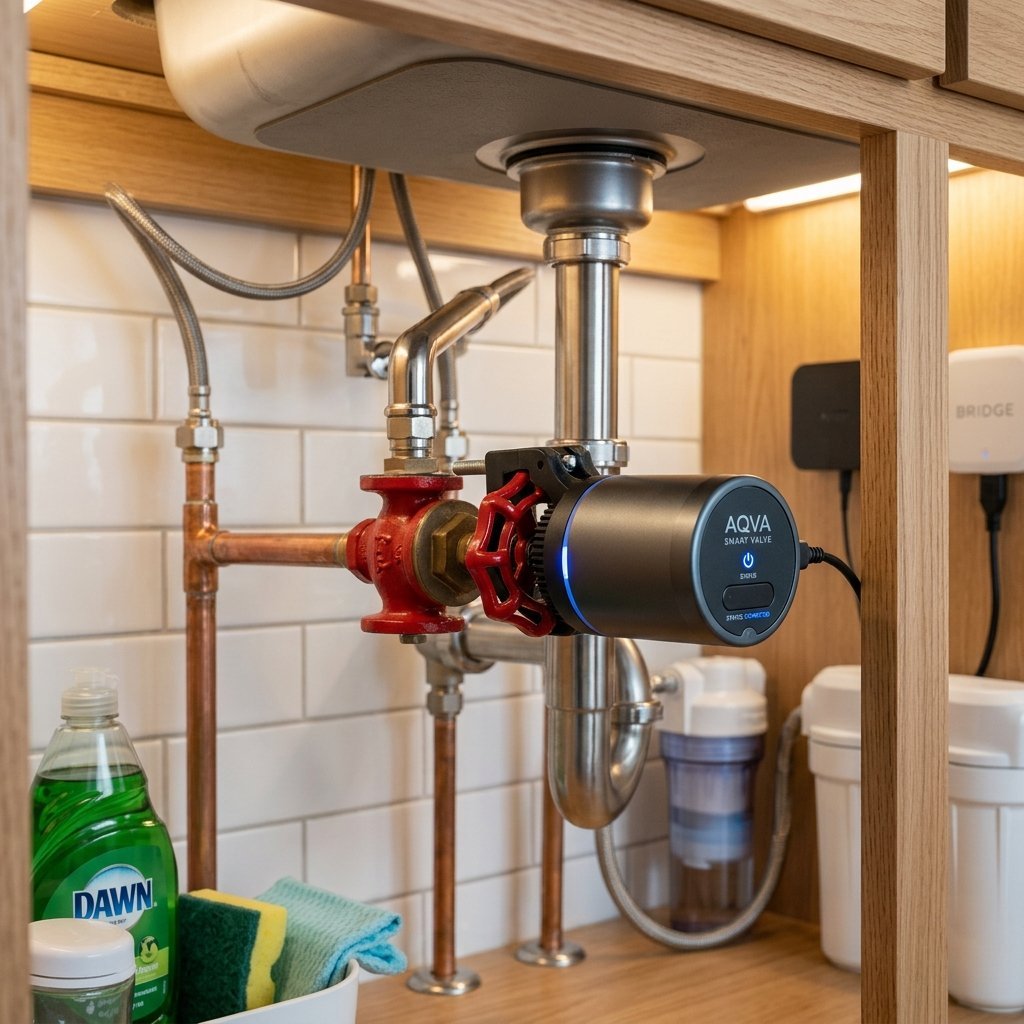
The underlying mechanics of these devices are surprisingly simple, yet they are engineered to be highly effective and reliable. A retrofit smart water valve essentially consists of a high-torque electric motor securely housed in a sturdy, often weather-resistant casing. This casing clamps tightly and securely onto the water pipe just above or below your existing quarter-turn ball valve. (It is extremely important to note right away that these retrofit devices do not and cannot work with older-style gate valves, which look like steering wheels and require multiple full rotations to completely close the water flow.)
An adjustable, heavy-duty metal arm extends from the motor housing and slots perfectly over the existing handle of your ball valve. When the smart motor receives a digital command—either from a paired smart water leak sensor, a tap on a smartphone app, or an automated routine run by a smart home hub—it springs into action. The motor activates, precisely turning the lever arm exactly 90 degrees, physically forcing the ball valve closed and instantly shutting off the main water supply to the entire house.
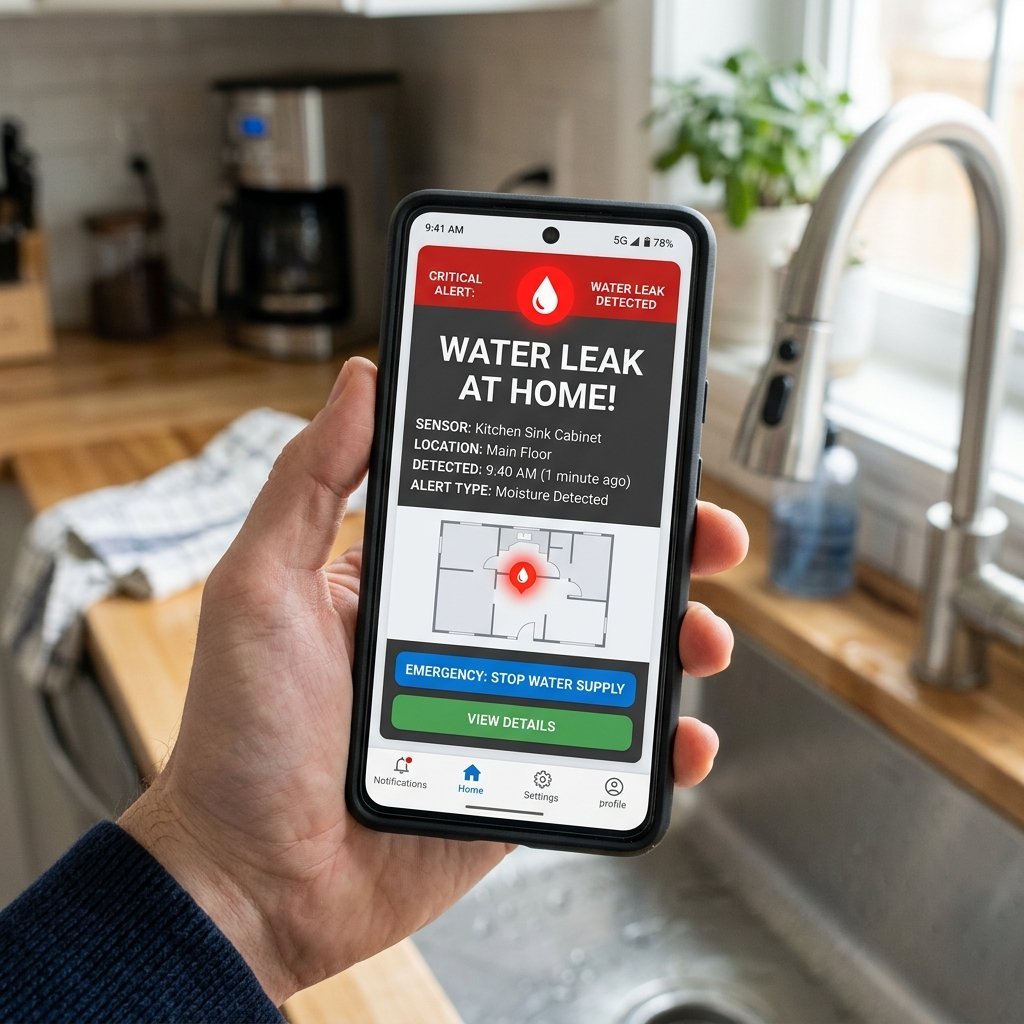
To provide true peace of mind, these motorized clamp-on systems are almost always paired with a network of smart water leak sensors. These small, battery-powered sensors should be strategically placed in high-risk areas throughout the home: tucked under bathroom and kitchen sinks, placed carefully near the base of toilets, positioned beside the washing machine, tucked next to the water heater, and behind the refrigerator if it has an ice maker. When any one of these remote sensors detects even a small puddle of moisture, it instantly transmits a wireless signal to the main valve motor to close, stopping the leak directly at the source before minor dripping turns into a major catastrophe.
The Top Retrofit Smart Water Valves to Consider for Your Home
With the rapid expansion of smart home technology, several excellent, highly reliable retrofit options have hit the market. Here is a curated selection of the best choices available for DIY homeowners looking to protect their property:
1. Dome Home Automation Water Shut-Off Valve
The Dome Water Shut-Off is a highly respected veteran in the retrofit space and remains a consistently top-recommended choice for its proven reliability and broad compatibility. It communicates primarily via the Z-Wave Plus protocol, which means you will definitely need a compatible Z-Wave smart home hub (such as SmartThings, Hubitat, or a custom Home Assistant setup) to operate and automate it.
Pros: It boasts excellent, durable build quality and a strong motor that is highly capable of turning moderately stiff valves. Because it uses Z-Wave, it integrates seamlessly into extensive, advanced smart home setups. It is designed to fit standard quarter-turn ball valves ranging up to 1 1/2 inches in diameter.
Cons: The absolute requirement of a separate Z-Wave hub can be a barrier to entry for beginners; it features no direct Wi-Fi connection capability. Furthermore, it typically does not come with leak sensors out of the box, meaning you’ll need to purchase compatible Z-Wave water sensors separately to complete the system.
2. EcoNet Controls Bulldog Valve Robot
If you live in an older home with a notoriously stiff ball valve that requires serious manual muscle to turn, the EcoNet Bulldog is undeniably your best bet. It is widely renowned in the industry for possessing one of the absolute highest torque motors in the entire retrofit category, ensuring it has the brute strength to close even the most stubborn, rarely-used valves.
Pros: It provides unmatched, industrial-grade turning force. It also features incredibly high-quality, heavy-duty mounting hardware that absolutely prevents the unit from slipping or twisting on the pipe. Conveniently, it is available in both Z-Wave and direct Wi-Fi versions, allowing you to choose the model that best suits your existing smart home ecosystem.
Cons: Because of its massive motor, it’s significantly bulkier, heavier, and more expensive than many of its competitors. The sheer power of the motor also means it must be mounted very precisely and securely; otherwise, the immense torque could potentially cause it to twist itself right off the pipe during operation.
3. YoLink Smart Water Valve Controller
YoLink takes a slightly different approach by utilizing LoRa (Long Range) wireless technology, which offers truly incredible wireless transmission range—often extending up to a full quarter-mile in open air. This unique feature makes the YoLink system absolutely perfect for sprawling, large-footprint homes, properties with outbuildings, or for main water valves located deep inside thick concrete basements where standard Wi-Fi or traditional smart home signals severely struggle to penetrate.
Pros: The phenomenal wireless range is a massive advantage. The system is also extremely affordable compared to the competition, and the expansive YoLink ecosystem includes excellent, inexpensive water leak sensors. A massive bonus is that the system can operate locally (device-to-device via Control-D2D technology); this means the valve will reliably shut off if a paired sensor detects water, even if your home’s internet router is completely down or unplugged.
Cons: It strictly requires the proprietary YoLink Hub to function; it will not work with generic Z-Wave or Zigbee hubs. Additionally, while the smartphone app interface is perfectly functional and reliable, it arguably lacks the modern visual polish and intuitive design found in apps from some larger, more mainstream tech brands.
Crucial Installation Tips for DIY Success
While installing a retrofit valve is decidedly a DIY project that most homeowners can handle, following a few critical key steps will ensure it works absolutely flawlessly when an actual plumbing emergency strikes:
- Verify Your Valve Type (Crucial): This is the single most critical step in the entire process. Retrofit clamp-on motors only work with quarter-turn ball valves (these are characterized by having a straight, lever-style handle). If you have an older gate valve (which looks like a round steering wheel), you have no choice but to hire a plumber to replace the valve itself with a modern ball valve before you can even consider using a retrofit smart device.
- Check Physical Clearance: Before purchasing, carefully measure and ensure there is ample physical space around your main water pipe for the rather bulky motor housing to fit. These devices can be surprisingly large, and pipes that are tucked tightly against a foundation wall, hidden in narrow crawlspaces, or surrounded by other utility lines might pose a significant installation challenge.
- Test the Valve Manually: Before clamping the expensive motor onto the pipe, turn your manual ball valve by hand. If it is completely seized shut or requires immense, two-handed force to budge, even the strongest smart motor might struggle, stall, or strip its gears. You may need to carefully “exercise” the valve (turning it back and forth several times) or apply a small amount of penetrating oil to the valve stem to loosen it up prior to installation.
- Secure the Mount Aggressively: The electric motor relies entirely on the pipe itself for physical leverage. If the mounting bracket is even slightly loose, the motor will simply spin itself harmlessly around the pipe instead of forcefully turning the valve handle. Tighten the provided hose clamps or mounting brackets as securely as possible without crushing the pipe.
- Test the System Regularly: Do not fall into the trap of installing the device and immediately forgetting about it. Once a month, you should proactively use your smartphone app to open and close the valve. This simple habit ensures the motor is functioning correctly, verifies the physical valve hasn’t seized up from disuse, and confirms the wireless connection to your smart home network remains active. Furthermore, physically test your leak sensors periodically by placing them on a damp paper towel to ensure they trigger the shut-off routine as expected.
Conclusion: Profound Peace of Mind Without the Plumber
Protecting your home, your cherished belongings, and your financial security from catastrophic water damage doesn’t have to involve expensive, invasive, and stressful plumbing modifications. Retrofit smart water valves offer a truly brilliant, highly accessible solution for proactive, modern homeowners. By simply clamping a smart, high-torque motor over your existing main water valve and pairing it seamlessly with a network of strategically placed wireless leak sensors, you instantly create a robust, automated defense system against unpredictable plumbing failures.
Whether you ultimately choose the sheer brute strength of the EcoNet Bulldog for a stubborn pipe, the impressive long-range reliability and offline capabilities of the YoLink system, or the seamless, integrated smart home experience of the Dome, investing in a retrofit smart water valve is undeniably one of the smartest, most cost-effective upgrades you can make to comprehensively safeguard your property. Take a free afternoon this weekend, install one of these systems yourself with basic hand tools, and begin enjoying the profound, lasting peace of mind that comes from knowing your home is actively protected from the unexpected, 24 hours a day, 7 days a week.
You can read more about The Future of Smart Mirrors in Modern Homes.
You can read more about Reclaim Your Floor Plan: The Ultimate Motorized Ceiling Drop-Down Bed Setup.